
By Dr. Bharat Vaidya B.A.M.S., M.D.
Owner and Founder of Ayurved Sadhana
Dean and Senior Faculty at Ayurved Sadhana
“True correction of
nerve irritability lies in disciplined movement, pure nourishment,
conscious breathing, elevated thought, and harmony of sound.”
— Dr. Bharat Vaidya
Beginning
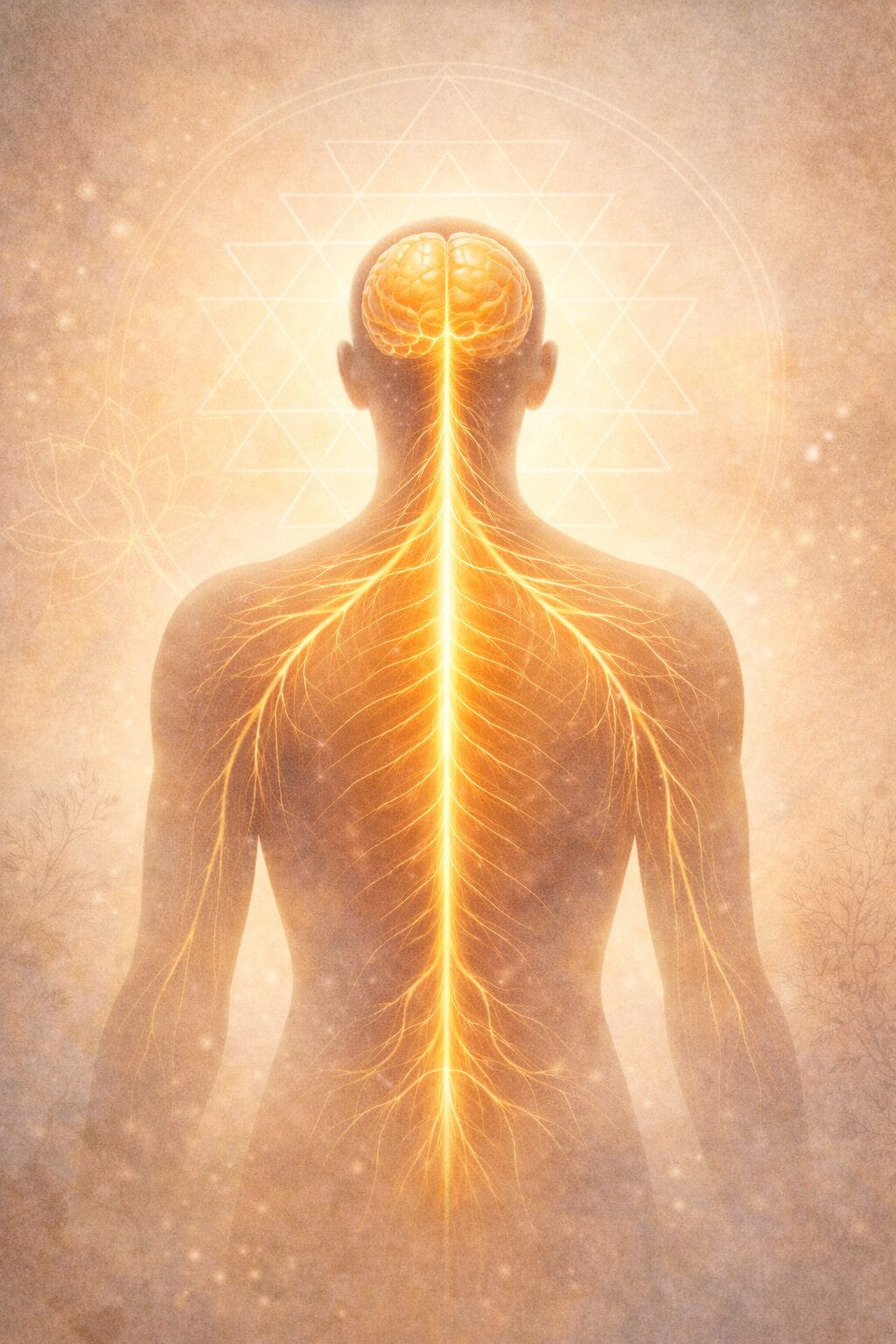
Nerve irritability is not merely a symptom; it is a habit of the nervous system. A tendency toward restlessness, persistent annoyance, or dissatisfaction reflects an internal state of neurological imbalance. These manifestations are not accidental, but arise when harmony between mind, nerve, and consciousness is disturbed.
Both Ayurveda and modern medicine — though expressed through different languages — recognize that prolonged nerve irritability becomes fertile ground for psychological disorders, inflammatory conditions, and chronic disease.
The nervous system acts as the gateway through which thought, emotion, immunity, and pathology interact.
Nerve Irritability in Modern Medicine
Modern neuroscience describes nerve irritability as neural hyperexcitability, often linked to chronic stress, autonomic nervous system dysregulation, prolonged sympathetic dominance, elevated cortisol, and inflammatory cytokines.
Common correlations include:
-
Psychological conditions such as anxiety, depression, insomnia, and irritability
-
Inflammatory disorders including IBS, migraines, fibromyalgia, and autoimmune disease
-
Somatic symptoms like muscle tension, fatigue, and pain hypersensitivity
Research confirms that sustained mental stress leads to neuroinflammation, altering neurotransmitters such as serotonin, dopamine, and GABA. In this way, inflammation originates not only in tissues, but within disturbed neural patterns themselves.
Modern approaches — exercise, breathing techniques, mindfulness, and cognitive therapies — reflect this understanding, often unknowingly echoing ancient wisdom.
Nerve Irritability in Ayurveda
Ayurveda views nerve irritability primarily as a Vata imbalance, often intensified by Rajas and Tamas at the mental level. This may involve:
-
Disturbance of Prana Vayu, leading to irregular nerve impulses
-
Imbalance of Vyana Vayu, affecting circulation and nerve nourishment
-
Aggravation of Sadhaka Pitta, resulting in emotional reactivity
-
Depletion of Ojas, reducing resilience of the nervous system
Ayurveda does not separate mind from nerves. Manas (mind), Prana (life force), and the Indriyas (sensory and nervous systems) function as a single continuum. Irritability and unhappiness are therefore not moral failures, but signals of disturbed pranic flow.
Inflammation: The Shared Root
Modern medicine attributes chronic inflammation to stress-induced neural dysregulation and cytokine release. Ayurveda describes the same process through aggravated Vata and Pitta, impaired Agni, formation of Ama, and obstruction of the Srotas.
Both systems converge on a single truth: inflammation does not begin in organs — it begins in the irritated nervous system and disturbed mind, later manifesting as physical disease.
Corrective Measures
Exercise regulates neurotransmitters, reduces cortisol, pacifies Vata, and stabilizes Prana.
Proper diet lowers inflammatory markers and restores Ojas through sattvic nourishment.
Hot bathing relaxes muscles, improves circulation, and relieves nerve tension.
Pranayama activates the parasympathetic nervous system while purifying the Nadis.
Yet exercise alone is insufficient without transformation of thought. Modern psychology calls this cognitive restructuring; Ayurveda names it Chitta Shuddhi — purification of the mind. When thought patterns shift, neural tension relaxes, revealing that consciousness precedes physiology.
Music therapy, validated today for its effects on limbic regulation and neuroplasticity, has long been understood in Ayurveda and Nada Yoga as vibrational medicine — sound aligned with consciousness to restore rhythmic harmony of Prana.
In the End
Nerve irritability is not a trivial complaint. It is a central pathological tendency underlying many diseases. True healing begins not with suppression of symptoms, but with transformation of nerve habits, thought patterns, and lifestyle rhythms.
अनुशासित-गतिः, शुद्ध-पोषणं, चेतन-श्वासोच्छ्वासः, उन्नतः विचारः, ध्वन्याः सामञ्जस्यं च
तन्त्रिका-क्षोभस्य वास्तविक-संशोधने अन्तर्भवति
“True correction of nerve irritability lies in disciplined movement, pure nourishment, conscious breathing, elevated thought, and harmony of sound.”
— Dr. Bharat Vaidya
All rights reserved — Ayurved Sadhana Vidyalaya, Colorado, U.S.A.
Please connect with us if you have any questions about this blog at info@ayurvedsadhana.com